



Why ‘Made in the UK’ is so important for local foodservice operators
Sustainability conversations in the foodservice market have been dominated in recent times by the question: ‘Is it recyclable?’
That simple measure of ‘good’ versus ‘bad’ packaging has served as the benchmark for environmental progress. But as the market’s understanding of sustainability and recyclability mature, so do the questions. Foodservice operators now think beyond recyclability and ask:
‘Can it actually be recycled?’ ‘Will it be recycled?’ ‘Is it compostable?’ ‘What are the performance trade-offs?’ ‘Does the pack affect my Extended Producer Responsibility for packaging (pEPR) score or fees?’ And importantly: ‘Where has my packaging come from?’
That simple measure of ‘good’ versus ‘bad’ packaging has served as the benchmark for environmental progress. But as the market’s understanding of sustainability and recyclability mature, so do the questions. Foodservice operators now think beyond recyclability and ask:
‘Can it actually be recycled?’ ‘Will it be recycled?’ ‘Is it compostable?’ ‘What are the performance trade-offs?’ ‘Does the pack affect my Extended Producer Responsibility for packaging (pEPR) score or fees?’ And importantly: ‘Where has my packaging come from?’
Share this story
Evolution not revolution
While the ‘Blue Planet Effect’ from more than a decade ago signalled the start of the rush towards sustainable practices and solutions, we’ve now entered a new phase in packaging’s sustainability journey.
Brands still care deeply about environmental credentials, but the focus has broadened from simple performance metrics to include operational factors. Covid-19, Brexit, and shifting global trade conditions have reshaped how procurement teams manage risk. Packaging must perform, be readily available, and support sustainability goals all at the same time. It must fit the realities of the food-to-go market, where costs and availability remain big topics.
This is why ‘Made in the UK’ has gained importance in recent times for UK foodservice operators. With shorter supply chains, faster lead times, and reduced transport emissions, domestic manufacturing is a strategic advantage.
Across the UK food-to-go value chain, from national chains to local operators, the phrase ‘Made in the UK’ has become shorthand for confidence.
Brands still care deeply about environmental credentials, but the focus has broadened from simple performance metrics to include operational factors. Covid-19, Brexit, and shifting global trade conditions have reshaped how procurement teams manage risk. Packaging must perform, be readily available, and support sustainability goals all at the same time. It must fit the realities of the food-to-go market, where costs and availability remain big topics.
This is why ‘Made in the UK’ has gained importance in recent times for UK foodservice operators. With shorter supply chains, faster lead times, and reduced transport emissions, domestic manufacturing is a strategic advantage.
Across the UK food-to-go value chain, from national chains to local operators, the phrase ‘Made in the UK’ has become shorthand for confidence.
Three core factors explain why this focus has become so important:
- Supply security and agility: UK-based manufacturing drastically shortens lead times. When demand spikes, local production gives brands a critical buffer.
- Lower emissions: Shorter transport routes reduce carbon emissions. In a landscape where brands are expected to report Scope 3 emissions, local sourcing becomes a practical way to lowering environmental footprints.
- Accountability and collaboration: Working with a UK partner means immediate access to technical support, product development teams, transparent supply metrics and a clear view into both product origins and regulatory compliance, from raw materials to delivery and use.
Cost pressures are real – but sustainability hasn’t disappeared
From our conversations with the market, it is evident that affordability has re-emerged as a key concern. Some UK foodservice operators continue to use expanded polystyrene (EPS) packaging due to its cost and availability, despite its environmental limitations.
This doesn’t mean sustainability has fallen off the agenda. Instead, the foundation of sustainability has changed. Brands are seeking packaging partners who deliver sustainable progress without operational disruption. Packaging must support sustainability goals, whilst also being practical, compliant, and consistent in supply.
This doesn’t mean sustainability has fallen off the agenda. Instead, the foundation of sustainability has changed. Brands are seeking packaging partners who deliver sustainable progress without operational disruption. Packaging must support sustainability goals, whilst also being practical, compliant, and consistent in supply.
A partner you can rely on
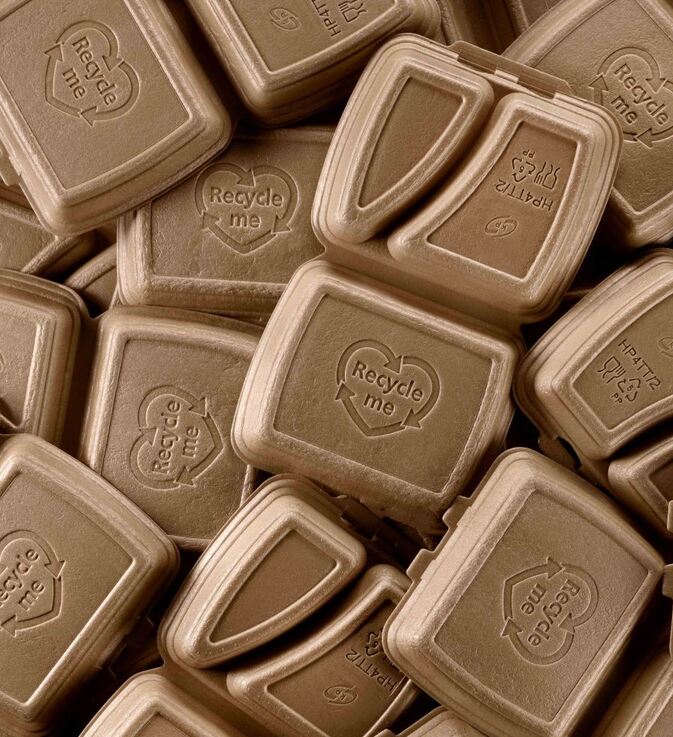
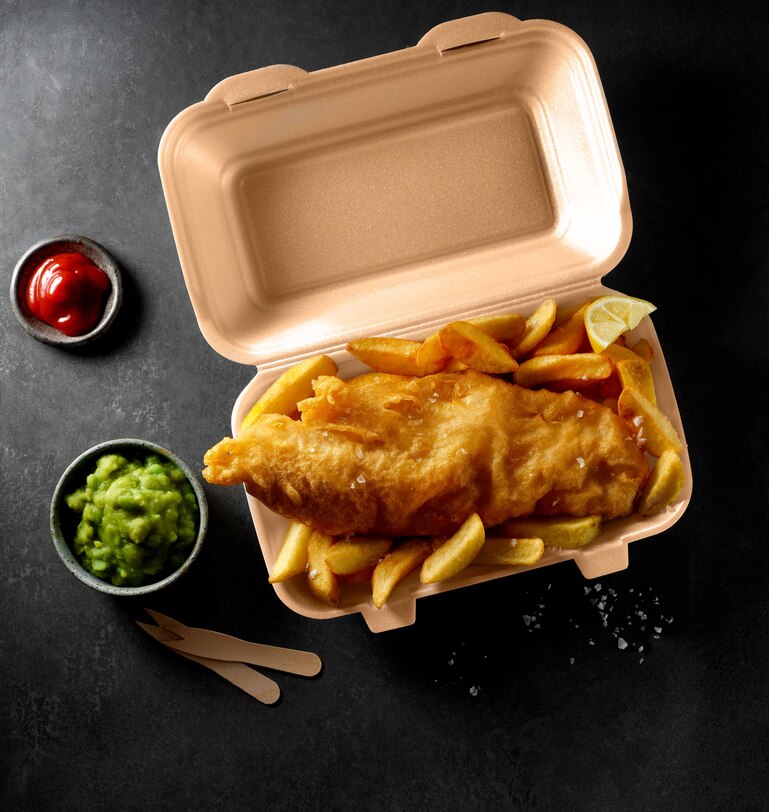
As a global leader in rigid and flexible packaging and specialty films, we develop solutions suited to the market’s needs. For foodservice and food-to-go, kp Infinity® is an extruded polypropylene (EPP) solution designed to replace banned polystyrene single-use foodservice packaging.
kp Infinity® keeps hot food up to 10°C warmer than alternatives, while remaining cool to the touch. It’s fully recyclable in existing kerbside recycling streams. This is a major advantage compared to compostable alternatives which often fall short in real-world environments and lack suitable collection infrastructure.
And because kp Infinity® is manufactured directly in the UK, local customers benefit from:
kp Infinity® keeps hot food up to 10°C warmer than alternatives, while remaining cool to the touch. It’s fully recyclable in existing kerbside recycling streams. This is a major advantage compared to compostable alternatives which often fall short in real-world environments and lack suitable collection infrastructure.
And because kp Infinity® is manufactured directly in the UK, local customers benefit from:
- predictable lead times; responsiveness to market surges.
- transparent communication from production to delivery.
- reduced dependence on overseas freight; less impact from raw material bottlenecks.
- continuous innovation driven by local collaboration with customers.
Expectation to integration
The sustainability conversation in foodservice packaging has evolved from aspiration to accountability. Recyclability remains essential, but brands and their operators need confidence that their packaging supply is secure, that materials are truly recoverable, and that the products support local and regulatory sustainability goals.
To confirm, sustainable packaging has reached a point of maturity. Brands no longer see it as a niche investment, but a baseline expectation. The next frontier is integration and embedding sustainability within every operational and supply decision.
As EPR regulations take hold and data transparency becomes mandatory, packaging partners who can provide verified information, local production, and real circular solutions will hold stronger relationships in the market.
We are that partner. We provide confidence in recyclability, confidence in supply, and confidence in origin.
For food-to-go and foodservice brands, and operators ready to balance sustainability with real-world operations, the choice is clear: kp Infinity®.
To confirm, sustainable packaging has reached a point of maturity. Brands no longer see it as a niche investment, but a baseline expectation. The next frontier is integration and embedding sustainability within every operational and supply decision.
As EPR regulations take hold and data transparency becomes mandatory, packaging partners who can provide verified information, local production, and real circular solutions will hold stronger relationships in the market.
We are that partner. We provide confidence in recyclability, confidence in supply, and confidence in origin.
For food-to-go and foodservice brands, and operators ready to balance sustainability with real-world operations, the choice is clear: kp Infinity®.
More like this
Follow us


Contact us
Klöckner Pentaplast GroupCapital House, 4th Floor,
25 Chapel Street
London NW1 5DH
United Kingdom
Legal
Copyright® Klöckner Pentaplast 2026 | kp and other kp marks are registered or proprietary marks of Klöckner Pentaplast