



The rise of 100% Recycled PET sourced exclusively from food packaging trays
Across the globe, the conversation around packaging is shifting. ‘Sustainability’ no longer just means lightweighting or reducing the amount of plastic used. We’ve entered a phase where brands and retailers are expected to demonstrate something far more important: true circularity.
For companies navigating 2026's evolving sustainability landscape and tightening legislation, food trays made entirely from 100% recycled PET (rPET), sourced from food trays, represent more than incremental progress. They are becoming the benchmark for what genuinely circular packaging can achieve.
The demand for circular solutions isn't driven by regulation alone. Consumers, investors and stakeholders increasingly ask the same question: what happens to packaging after use? Brands that can demonstrate closed-loop systems - where materials continuously return to the same application – gain an advantage that extends far beyond compliance.
For companies navigating 2026's evolving sustainability landscape and tightening legislation, food trays made entirely from 100% recycled PET (rPET), sourced from food trays, represent more than incremental progress. They are becoming the benchmark for what genuinely circular packaging can achieve.
The demand for circular solutions isn't driven by regulation alone. Consumers, investors and stakeholders increasingly ask the same question: what happens to packaging after use? Brands that can demonstrate closed-loop systems - where materials continuously return to the same application – gain an advantage that extends far beyond compliance.
Share this story
Why rPET is rising to the forefront
rPET's rise in food packaging is no accident. As an established material, it offers a crucial combination: proven recyclability, excellent clarity for product visibility, and compliance with strict food safety standards. Unlike alternative materials still navigating approval, rPET has decades of safe use in food contact applications.
The benefits for brands accumulate quickly. Reducing virgin plastic supports Environmental, Social and Governance (ESG) commitments, strengthens investor confidence and reinforces consumer trust. Supply chains become more resilient as reliance on virgin resin decreases. And, critically, the material itself maintains the performance characteristics - including clarity, barrier properties, and structural integrity - fresh protein, produce and ready meals depend on.
The benefits for brands accumulate quickly. Reducing virgin plastic supports Environmental, Social and Governance (ESG) commitments, strengthens investor confidence and reinforces consumer trust. Supply chains become more resilient as reliance on virgin resin decreases. And, critically, the material itself maintains the performance characteristics - including clarity, barrier properties, and structural integrity - fresh protein, produce and ready meals depend on.
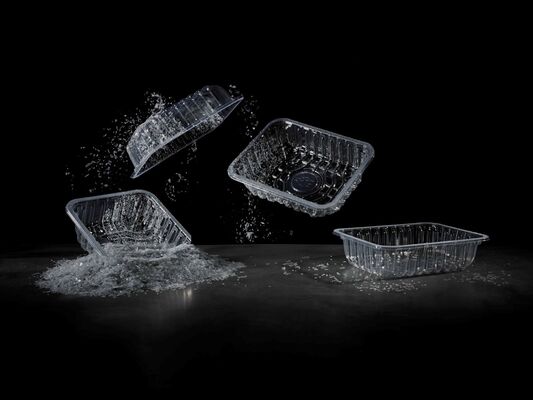
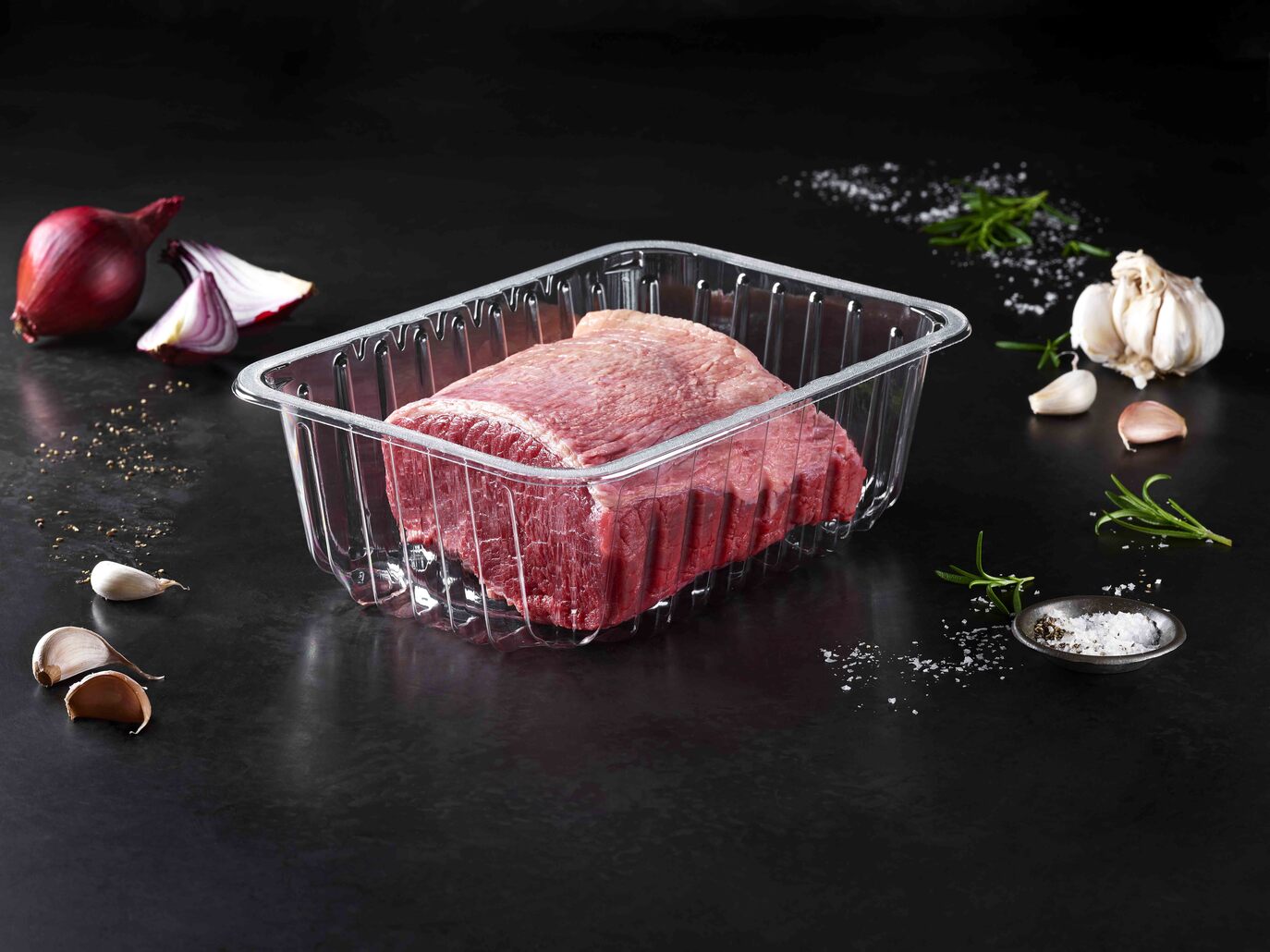
For retailers, trays made entirely from tray-verifed rPET, tick multiple boxes. They support sustainability objectives, meet rising consumer expectations, and maintain strong shelf appeal. rPET’s transparency showcases food at its best, and where collection and sorting systems exist, the material is well-supported by established recycling infrastructure.
The challenges we're solving together
True circularity isn't without its hurdles and challenges. Contamination in recycling streams, inconsistent collection rates, variable sorting accuracy and downcycling all affect the quality and availability of recycled material. These challenges aren’t roadblocks; they’re engineering and systems challenges that the industry is actively addressing through material science innovation and supply chain collaboration.
At kp, our kp Tray2Tray® initiative arose from recognising a key inefficiency: food-safe tray material enters the recycling system, but historically only a small portion is recycled back into food-grade trays. Much of it is downcycled into other applications, such as strapping or non-contact sensitive applications, reinforcing the demand for virgin material in food trays.
At kp, our kp Tray2Tray® initiative arose from recognising a key inefficiency: food-safe tray material enters the recycling system, but historically only a small portion is recycled back into food-grade trays. Much of it is downcycled into other applications, such as strapping or non-contact sensitive applications, reinforcing the demand for virgin material in food trays.
By working directly with recycling partners to create dedicated, tray-based feedstock streams, we're closing that loop. Our production facility in Pravia, Spain, recently became the first food packaging company to achieve RETRAY and RecyClass Traceability Certification for closed-loop tray recycling – giving brands verified assurance about the safety, quality and origin of the recycled content in their packaging.

The material innovations happening now are substantial. Advanced washing and purification processes now produce rPET that matches virgin material in clarity and performance. ‘Design for recyclability’ principles are being embedded early in development. Testing protocols continue to evolve, ensuring recycled materials meet the same rigorous safety standards as virgin alternatives.
Making the circular economy work in practice – not just in theory
Circularity requires more than the right materials; it requires the right systems. This means designing trays that perform flawlessly in use and are easily recyclable at end of life. It also requires partnerships with recyclers who can guarantee material traceability and quality. For brands, it means adopting rPET packaging that transitions seamlessly into their existing operations.
Our first kp 100% Tray2Tray® innovation was developed as a true drop-in solution. At kp, we believe that packaging sustainability should be simple: brands shouldn't need to retrofit lines, adjust line speeds or compromise performance. The only change should be the environmental impact.
This is particularly vital for fresh food applications where packaging integrity directly affects food safety and waste prevention. A tray that fails doesn't just create a packaging problem; it contributes to food waste, which often has a far greater environmental footprint than the packaging itself. High-quality rPET solutions address both concerns.
Our first kp 100% Tray2Tray® innovation was developed as a true drop-in solution. At kp, we believe that packaging sustainability should be simple: brands shouldn't need to retrofit lines, adjust line speeds or compromise performance. The only change should be the environmental impact.
This is particularly vital for fresh food applications where packaging integrity directly affects food safety and waste prevention. A tray that fails doesn't just create a packaging problem; it contributes to food waste, which often has a far greater environmental footprint than the packaging itself. High-quality rPET solutions address both concerns.
The opportunity ahead
At kp, our "Packaging with Integrity" philosophy ensures we approach these challenges with the precision they deserve.
As 2026 unfolds, the gap will widen between brands advancing circular packaging and those treating sustainability as a compliance exercise. Regulations like the EU's Packaging and Packaging Waste Regulation will continue raising the bar, but market expectations are moving faster than mandates.
For brands and retailers looking ahead, 100% rPET food trays represent an opportunity to lead. They provide verifiable circularity, the performance that fresh food applications require, and a strong foundation for delivering on sustainability commitments. The infrastructure exists and continues expanding; the material science is proven and the business case is compelling. Importantly, meaningful progress is already being made. Many food packaging companies are incorporating between 30% and 80% rPET recovered from trays back into new food trays, delivering tangible circularity today and strengthening the long term sustainability of the system.
For brands and retailers looking ahead, 100% rPET food trays represent an opportunity to lead. They provide verifiable circularity, the performance that fresh food applications require, and a strong foundation for delivering on sustainability commitments. The infrastructure exists and continues expanding; the material science is proven and the business case is compelling. Importantly, meaningful progress is already being made. Many food packaging companies are incorporating between 30% and 80% rPET recovered from trays back into new food trays, delivering tangible circularity today and strengthening the long term sustainability of the system.
At kp, our "Packaging with Integrity" philosophy ensures we approach these challenges with the precision they deserve. Through dedicated recycling partnerships, industry-first certifications and innovations that close loops rather than slow them down, we’re committed to driving real change. Our “Investing in Better" sustainability strategy provides the framework for continuous improvement, and targets to stay accountable.
The rise of 100% rPET sourced exclusively from food trays represents a fundamental shift in how packaging systems operate. For brands ready to embrace genuine circularity, the solutions exist today. The question isn't whether to transition, but how soon. And with kp as a partner, that transition has never been easier.
Ready to take packaging sustainability to the next level? Click the button below to learn more about kp Tray2Tray® and our circular packaging solutions.
The rise of 100% rPET sourced exclusively from food trays represents a fundamental shift in how packaging systems operate. For brands ready to embrace genuine circularity, the solutions exist today. The question isn't whether to transition, but how soon. And with kp as a partner, that transition has never been easier.
Ready to take packaging sustainability to the next level? Click the button below to learn more about kp Tray2Tray® and our circular packaging solutions.
More like this
Follow us


Contact us
Klöckner Pentaplast GroupCapital House, 4th Floor,
25 Chapel Street
London NW1 5DH
United Kingdom
Legal
Copyright® Klöckner Pentaplast 2026 | kp and other kp marks are registered or proprietary marks of Klöckner Pentaplast