



Reducing risk in medical device packaging without slowing development
Medical device development teams are under constant pressure to move faster. Shorter development cycles, evolving regulatory requirements and growing sustainability expectations are changing how new devices and their packaging move from concept to commercialisation.
But speed can introduce risk when packaging decisions come too late in the development process. A material change, unexpected forming issue or failed packaging test discovered late can trigger additional development work, new prototypes and repeat qualification testing. What initially looked like a faster path can quickly become a costly delay.
Reducing that risk does not have to mean adding more time to development. By considering packaging earlier, using simulation and rapid prototyping to evaluate designs, and selecting materials with performance and regulatory requirements in mind, medical device manufacturers can identify potential issues sooner and move toward qualification with greater confidence.
Reducing that risk does not have to mean adding more time to development. By considering packaging earlier, using simulation and rapid prototyping to evaluate designs, and selecting materials with performance and regulatory requirements in mind, medical device manufacturers can identify potential issues sooner and move toward qualification with greater confidence.
Share this story
Start with packaging earlier, not later
Packaging is sometimes treated as a downstream consideration once the device itself is largely defined. In reality, decisions involving package geometry, material selection, sterilisation method and distribution requirements can have a significant impact on the development process.
Bringing packaging expertise into the conversation earlier creates an opportunity to identify potential conflicts before significant time and resources have been committed.
Material selection is a good example. The appropriate rigid film depends on much more than dimensions or thickness. Device weight and geometry, sharp or concentrated load points, forming depth, sterilisation method, lidding material and expected distribution environment can all influence performance.
Evaluating these requirements together helps narrow material choices earlier and establishes a stronger foundation for package development.
Evaluating these requirements together helps narrow material choices earlier and establishes a stronger foundation for package development.
Use simulation to learn before you tool
Physical prototypes and testing remain essential to medical device packaging development, but they do not have to provide the first indication that a design may have a problem.
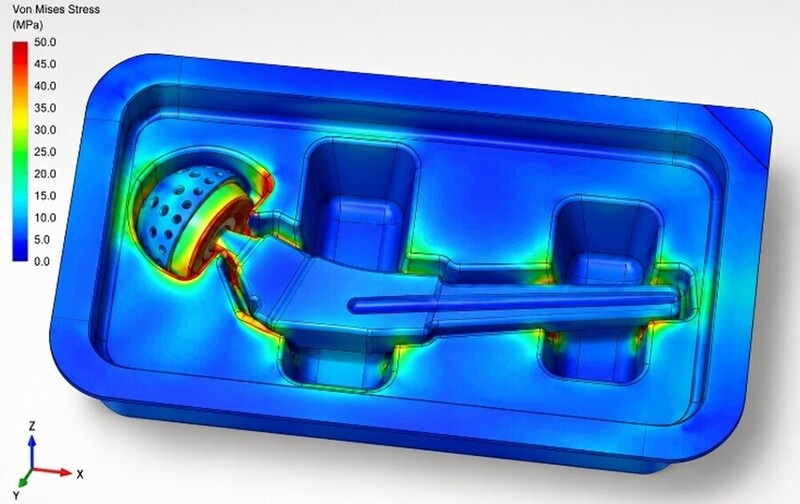
Finite Element Analysis (FEA) can help development teams better understand how a proposed package and material may behave before moving into physical tooling. Simulation can evaluate areas such as material distribution, thinning and stress concentrations within a thermoformed package.
This allows engineers to compare potential designs, identify areas that may require modification and make more informed decisions before producing a physical prototype.
The objective is not to replace physical testing. It is to make physical testing more productive.
When simulation is used to eliminate less-promising approaches early, development teams can focus prototyping and testing resources on designs with a stronger probability of success.
Finite Element Analysis (FEA) can help development teams better understand how a proposed package and material may behave before moving into physical tooling. Simulation can evaluate areas such as material distribution, thinning and stress concentrations within a thermoformed package.
This allows engineers to compare potential designs, identify areas that may require modification and make more informed decisions before producing a physical prototype.
The objective is not to replace physical testing. It is to make physical testing more productive.
When simulation is used to eliminate less-promising approaches early, development teams can focus prototyping and testing resources on designs with a stronger probability of success.
Turn concepts into physical prototypes quickly
Once a design has been evaluated digitally, rapid prototyping provides the next opportunity to reduce uncertainty.
Physical samples allow teams to assess package fit, device orientation, loading, material behavior and other characteristics that cannot be fully evaluated on a computer screen. Just as importantly, prototypes give stakeholders something tangible to evaluate before moving toward production tooling.
The value comes from making this process both fast and iterative.
Physical samples allow teams to assess package fit, device orientation, loading, material behavior and other characteristics that cannot be fully evaluated on a computer screen. Just as importantly, prototypes give stakeholders something tangible to evaluate before moving toward production tooling.
The value comes from making this process both fast and iterative.
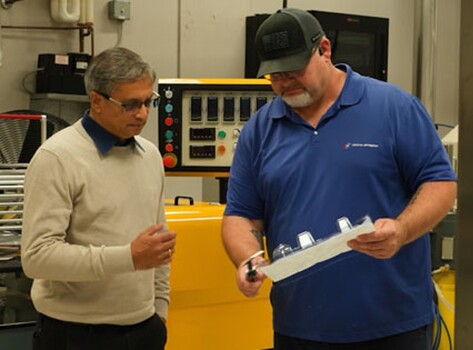
At kp’s i.center, medical device packaging concepts can move through material selection, FEA and rapid prototyping, with prototypes available in as little as three weeks depending on project requirements.
Build qualification considerations into development
In regulated medical device packaging, successful development ultimately requires more than producing a package that looks and performs as expected.
Material and package decisions need to support applicable performance, safety and regulatory requirements. For sterile barrier packaging, considerations associated with standards such as ISO 11607-1 can influence material selection and package design from the beginning. Biological evaluation requirements, including ISO 10993-5 where applicable, may also be part of the material evaluation process.
Material and package decisions need to support applicable performance, safety and regulatory requirements. For sterile barrier packaging, considerations associated with standards such as ISO 11607-1 can influence material selection and package design from the beginning. Biological evaluation requirements, including ISO 10993-5 where applicable, may also be part of the material evaluation process.
Addressing these considerations during development helps reduce the possibility of discovering later that an otherwise promising solution creates an additional qualification challenge.
It also changes the role of testing. Instead of using testing primarily to discover whether a design works, teams can use data, simulation and material expertise to build confidence in a solution before entering formal qualification.
Sustainability adds another design consideration
Sustainability objectives are increasingly becoming part of medical device packaging development as manufacturers look for opportunities to reduce environmental impact while maintaining the protection and performance required for healthcare applications.
That creates another reason to evaluate material options early.
That creates another reason to evaluate material options early.
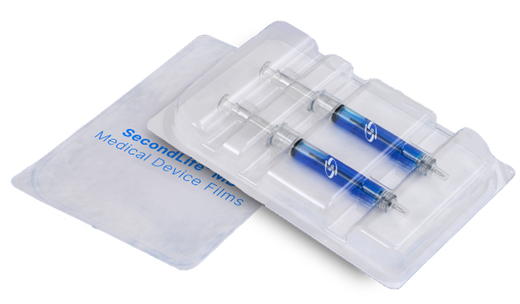
kpNext® MDR1, an advanced copolyester designed for recycling and compatible with the #1 PET stream, provides one option for manufacturers incorporating circularity considerations into package development. SecondLife® MD offers another pathway, incorporating 50% recycled content into rigid medical device packaging film.
The appropriate solution depends on the application. Device characteristics, package design, sterilisation, performance requirements and sustainability objectives all need to be considered together.
Introducing these options during development rather than after a package has already been qualified gives teams more flexibility to evaluate sustainability without creating unnecessary disruption later.
Development speed comes from eliminating uncertainty
Moving faster does not necessarily mean eliminating steps from the packaging development process. In many cases, the better opportunity is to make each step more informed.
Earlier material selection can reduce the number of options that need to be tested. Simulation can identify potential issues before tooling. Rapid prototyping can validate concepts while designs are still flexible. Application and regulatory knowledge can help ensure that promising solutions are developed with qualification requirements already in mind.
Together, these capabilities create a development process designed to uncover problems when they are easier to solve.
Earlier material selection can reduce the number of options that need to be tested. Simulation can identify potential issues before tooling. Rapid prototyping can validate concepts while designs are still flexible. Application and regulatory knowledge can help ensure that promising solutions are developed with qualification requirements already in mind.
Together, these capabilities create a development process designed to uncover problems when they are easier to solve.
From material supplier to development partner
The role of a medical device packaging film supplier is changing. Providing a material that meets a specification remains essential, but manufacturers increasingly need support connecting material properties with package design, processing, sterilisation, testing and qualification.
At kp, our medical device specialists and i.center capabilities bring these disciplines together. We work with customers from initial material selection through simulation, prototyping, testing and implementation to help identify potential challenges earlier and develop packaging solutions with greater confidence.
The goal is not simply to accelerate one stage of development. It is to create a more informed path from concept to qualification.
Reducing development risk does not have to mean slowing innovation. With the right information, tools and expertise available earlier in the process, reducing risk can be one of the most effective ways to move faster.
Reducing development risk does not have to mean slowing innovation. With the right information, tools and expertise available earlier in the process, reducing risk can be one of the most effective ways to move faster.
More like this
Follow us


Contact us
Klöckner Pentaplast GroupCapital House, 4th Floor,
25 Chapel Street
London NW1 5DH
United Kingdom
Legal
Copyright® Klöckner Pentaplast 2026 | kp and other kp marks are registered or proprietary marks of Klöckner Pentaplast