


Innovation in recyclable fish packaging: kp Evolve® Fish Boards
For protein packaging designers, the brief has changed.
Fresh meat, fish, and poultry packs still need to protect the product, perform on high-speed lines, and look good on shelf. But today, they also need to support a longer shelf life, reduce food waste, align with retailer sustainability targets, contain recycled content where possible, and be designed for recycling from the outset.
Fresh meat, fish, and poultry packs still need to protect the product, perform on high-speed lines, and look good on shelf. But today, they also need to support a longer shelf life, reduce food waste, align with retailer sustainability targets, contain recycled content where possible, and be designed for recycling from the outset.
In short, packaging must work harder than ever before, without a significant increase in cost. That is driving the shift of vacuum packaging, from a specialist format to a mainstream solution.
Share this story
A sustainable balancing act
For consumers, it can mean a cleaner, more confident buying experience.
For consumers, it can mean a cleaner, more confident buying experience. And for brands and processors, it offers something increasingly valuable: a way to connect product protection, sustainability, and commercial performance in one pack design.
All of this is important when considering that food waste is now one of the most important sustainability challenges in the fresh food chain. Data from Zero Waste Scotland estimates that every 1kg of food waste sent to landfill produces the same carbon emissions as 25,000 500ml bottles . Pound-for-pound, food waste causes far more damage to the environment than food packaging waste ever could. And meat and fish are among the categories responsible for the highest emissions from household food waste , making shelf life and product protection especially important in protein packaging.
At the same time, packaging is under greater regulatory and commercial scrutiny. In the EU, the Packaging and Packaging Waste Regulation (PPWR) is pushing packaging towards recyclability, recycled content, clearer labelling, and reduced unnecessary packaging, with all packaging required to be recyclable by 2030. And, in markets across the globe, extended producer responsibility (EPR) reforms are introducing varying measures aimed at incentivising a more circular approach to packaging.
To learn more about how Europe-wide packaging reforms will impact your business, read our blogs on the evolution of EPR reforms and the introduction of PPWR.
An evolving market
This is driving rapid change in the vacuum food packaging market. Any businesses that are solely focused on reducing plastic risk being left behind. Success now hinges on using the right materials in a more considered way, ensuring each pack has a clear end-of-life route, strong performance, and a lower overall environmental impact.
For years, the tension between packaging and food waste has resulted in a range of material experiments, including laminated and hybrid structures designed to balance stiffness, seal integrity, shelf appeal, and barrier performance. Some have been successful, others less so. But the market is now converging around recyclable mono PET formats, particularly those that can incorporate recycled PET.
For years, the tension between packaging and food waste has resulted in a range of material experiments, including laminated and hybrid structures designed to balance stiffness, seal integrity, shelf appeal, and barrier performance. Some have been successful, others less so. But the market is now converging around recyclable mono PET formats, particularly those that can incorporate recycled PET.
The reason is practical. PET is widely accepted in existing recycling streams, compatible with established tray infrastructure, and familiar to retailers, recyclers, and consumers. It also gives brands a route to meet recycled content requirements without compromising the clarity, stiffness, and seal performance that fresh protein demands.
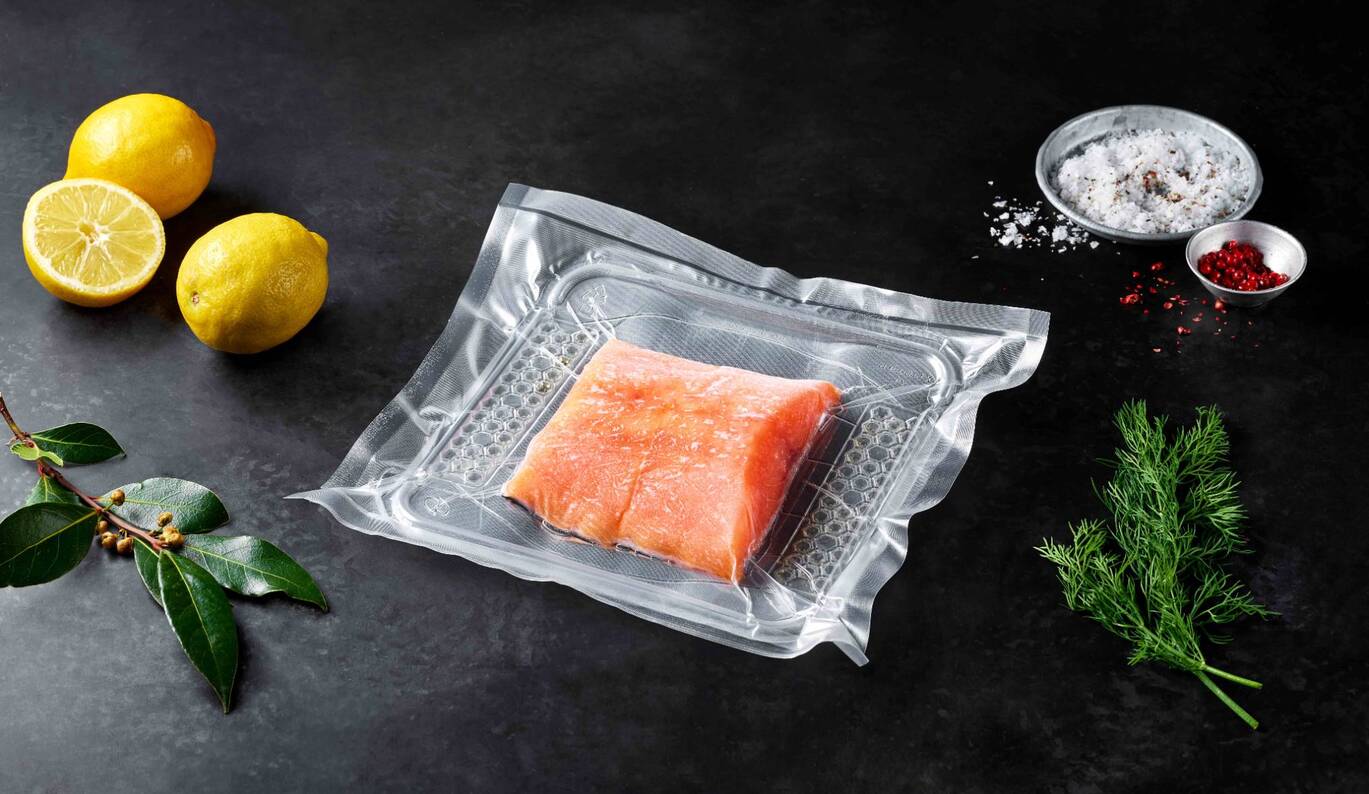
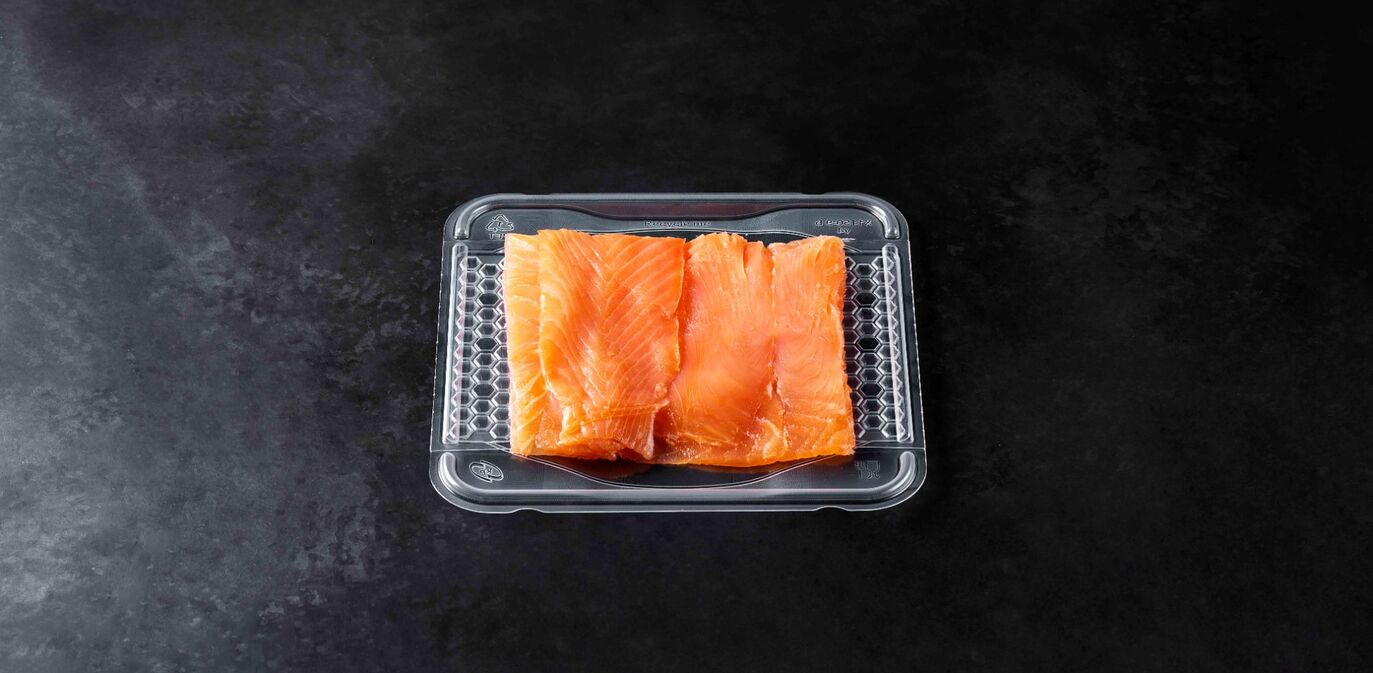
kp Evolve® Fish Boards are designed with that reality in mind. This mono PET innovation, designed for fish applications, preserves taste and texture, extends shelf life, and can be made with up to 100% recycled PET, including kp Tray2Tray® material – a circular solution made using recycled PET flake sourced from other food trays.
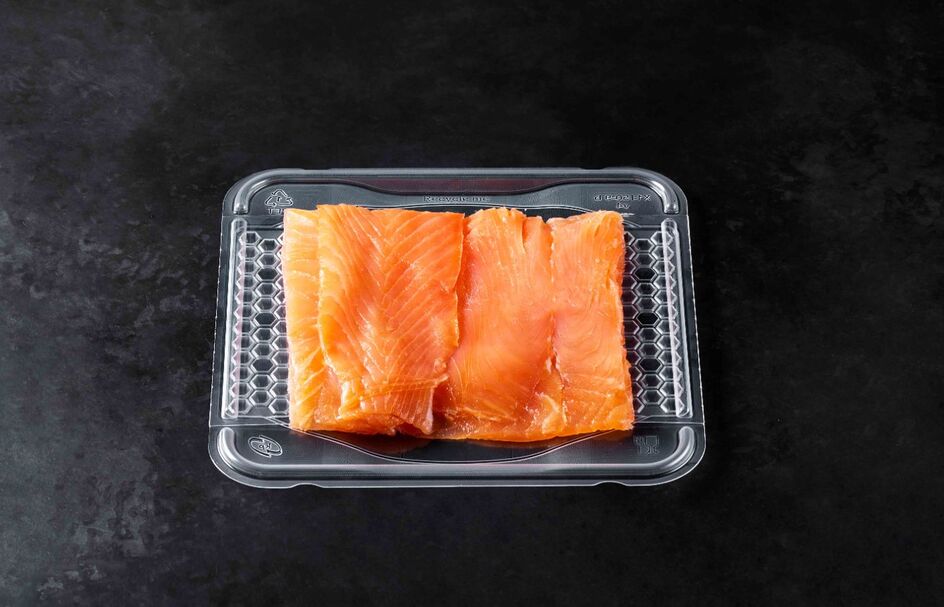
The result is a pack that responds to multiple pressures at once, meeting market demands for more versatile solutions. It supports premium presentation through strong product visibility. It helps protect food during transport and handling through secure, leakproof performance. It enables shallow pack formats that improve logistics efficiency. And, crucially, it supports a move away from harder-to-recycle structures towards circular PET packaging models, future-proofing it in an increasingly recycling-centric market.
Nowhere is this more important than in the fish category.
Nowhere is this more important than in the fish category.
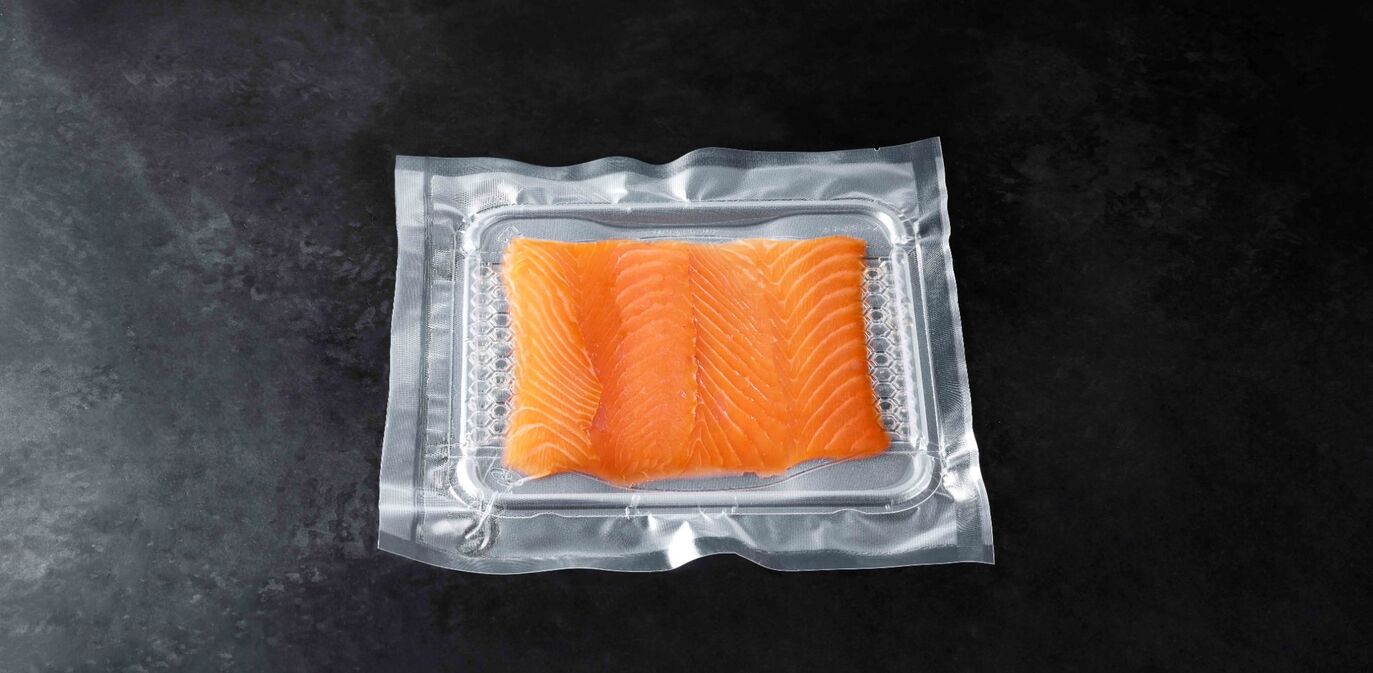
Fish processing faces packaging challenges
Fish packaging is under intense scrutiny because it has several complex needs. The product is highly sensitive. Odour and appearance can all affect consumer perception, while leakage is unacceptable.
And purge – moisture that seeps out of meat or fish as it ages and its fibres break down – is a particular problem for protein packers using vacuum packaging, as vacuum sealing draws out more liquid and spoils the look of the product.
To address these needs, traditional fish packaging formats have historically used metallised boards or mixed-material structures. The problem is that these structures are difficult to recycle, making them an unwanted compromise that does not align with evolving packaging standards.
The industry is now moving away from those hybrid formats and towards clear, recyclable plastic solutions that offer stronger alignment with retailer expectations and recycling infrastructure. This shift is not cosmetic. Retailers are actively removing non-recyclable packaging formats from shelves, and suppliers that cannot demonstrate progress risk being left behind.
The industry is now moving away from those hybrid formats and towards clear, recyclable plastic solutions that offer stronger alignment with retailer expectations and recycling infrastructure. This shift is not cosmetic. Retailers are actively removing non-recyclable packaging formats from shelves, and suppliers that cannot demonstrate progress risk being left behind.
kp’s newly launched kp Evolve® Fish Boards have been developed specifically to meet this moment.
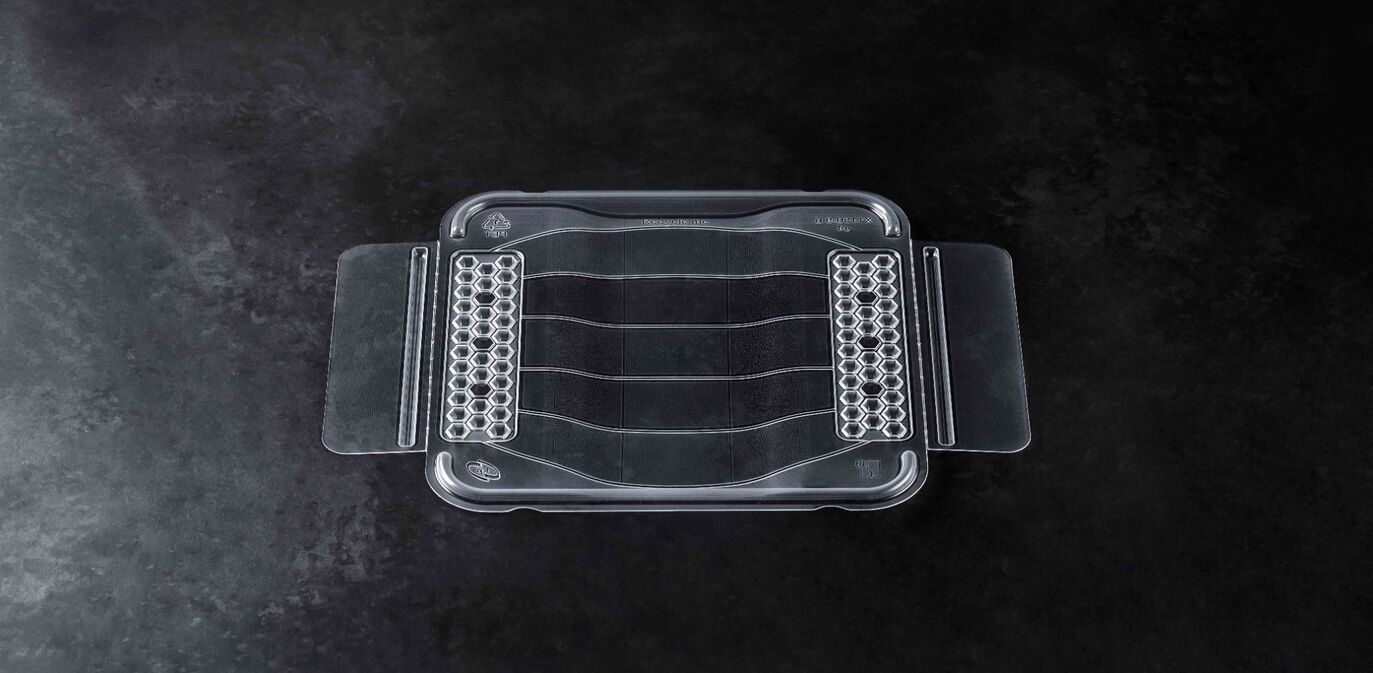
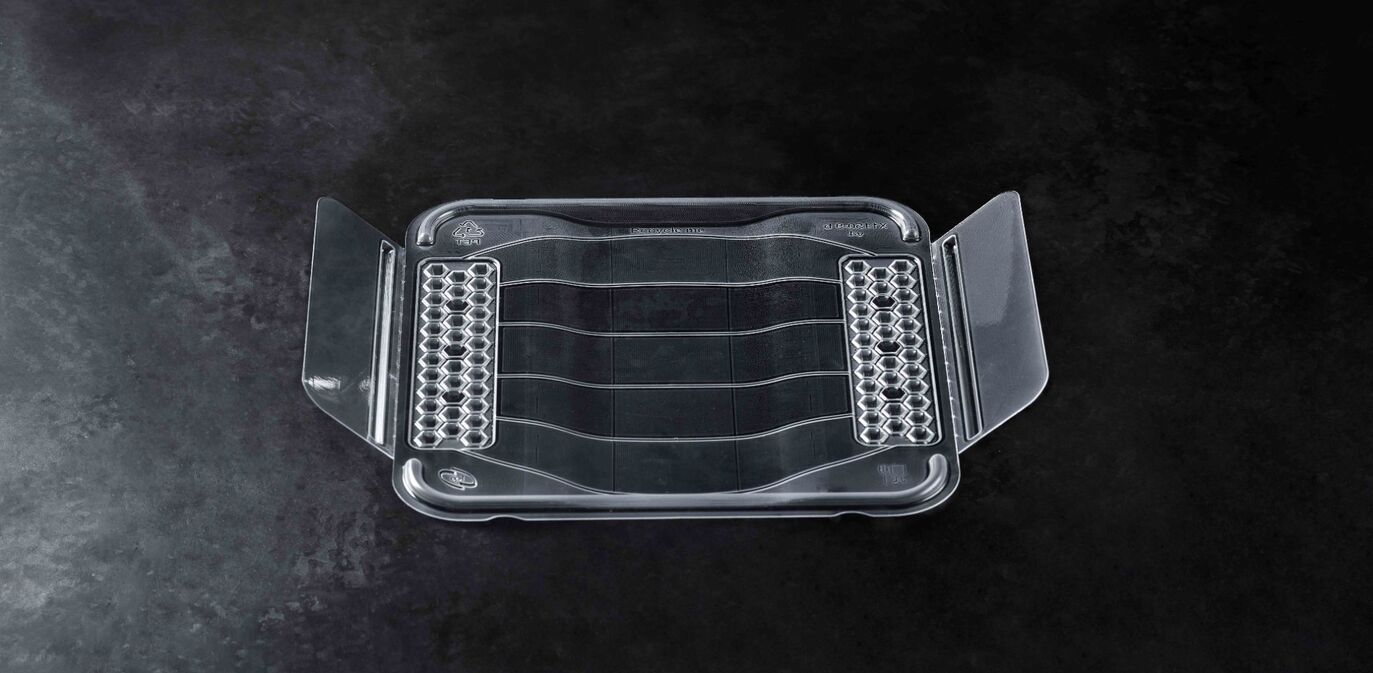
The mono PET boards are designed for processed fish applications and can contain up to 100% recycled content. They are fully recyclable in established PET recycling streams, offer strong vacuum packaging performance and shelf clarity, and are perfectly designed for high-speed automated packing lines for processed fish.
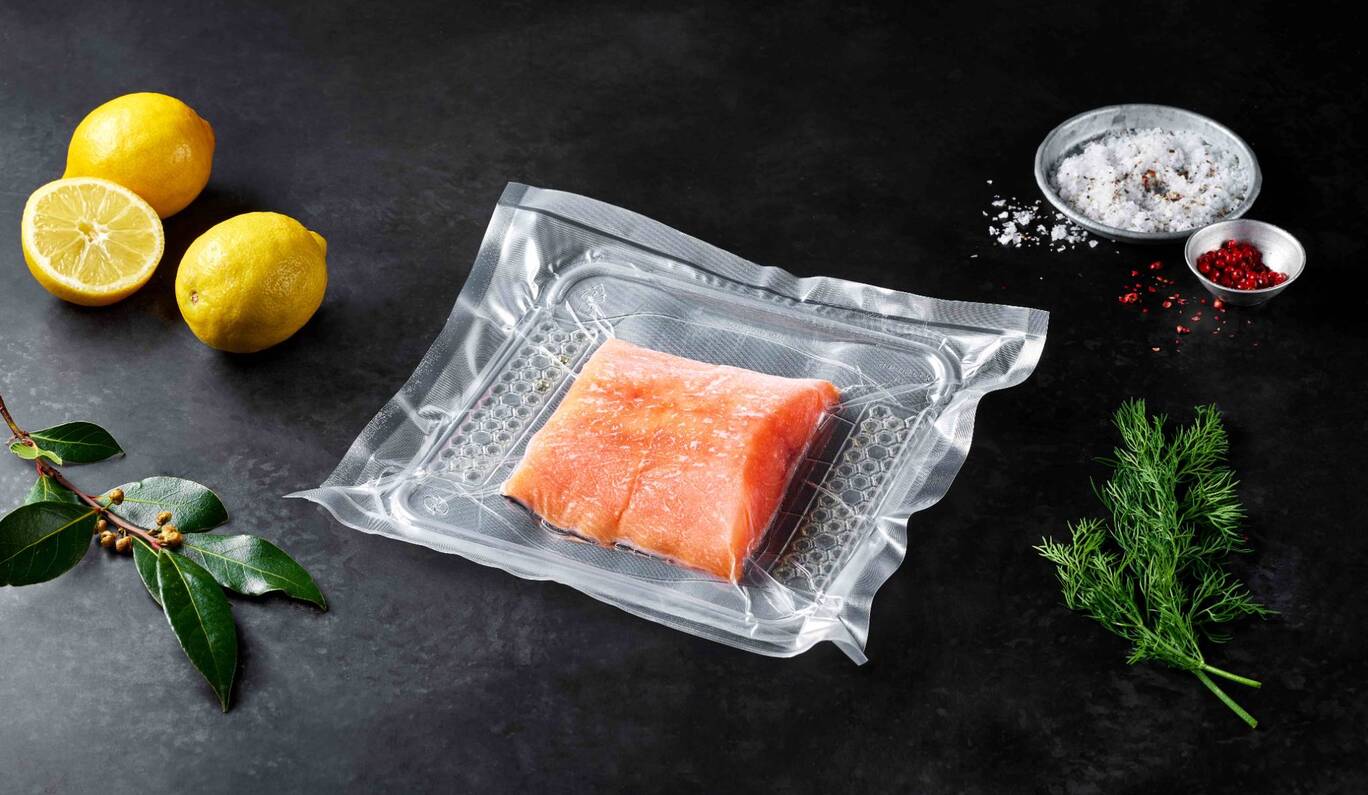
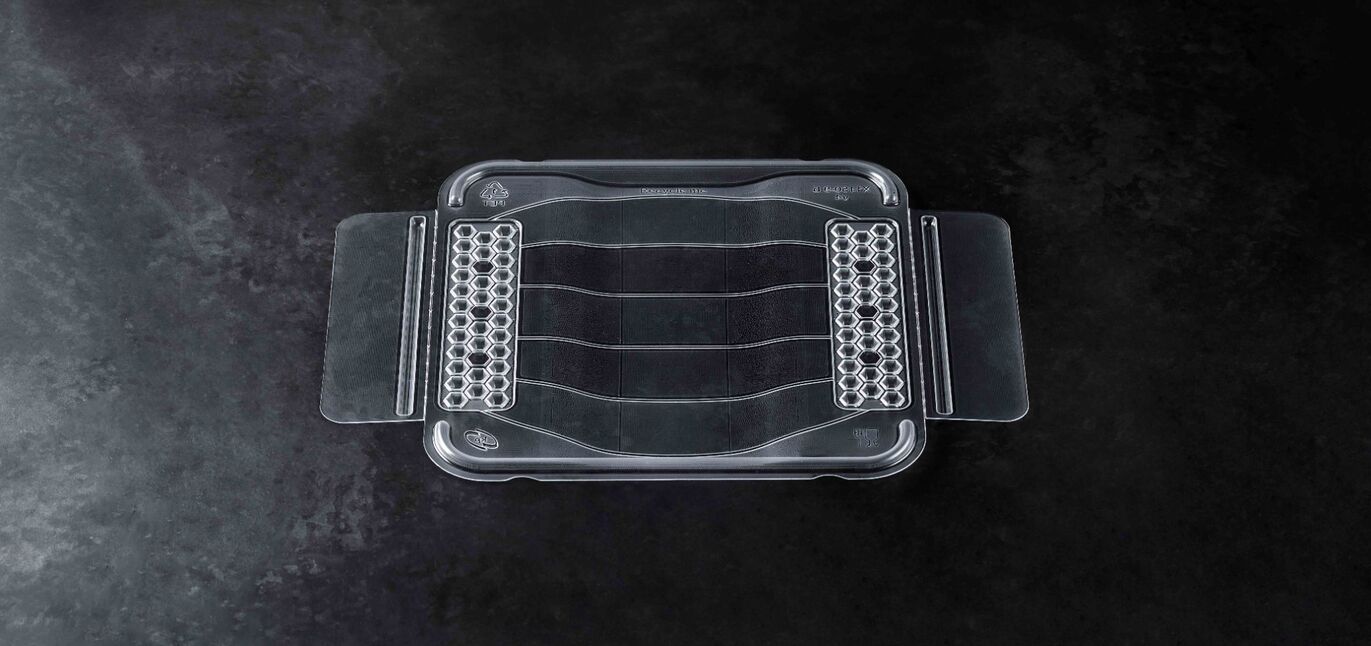
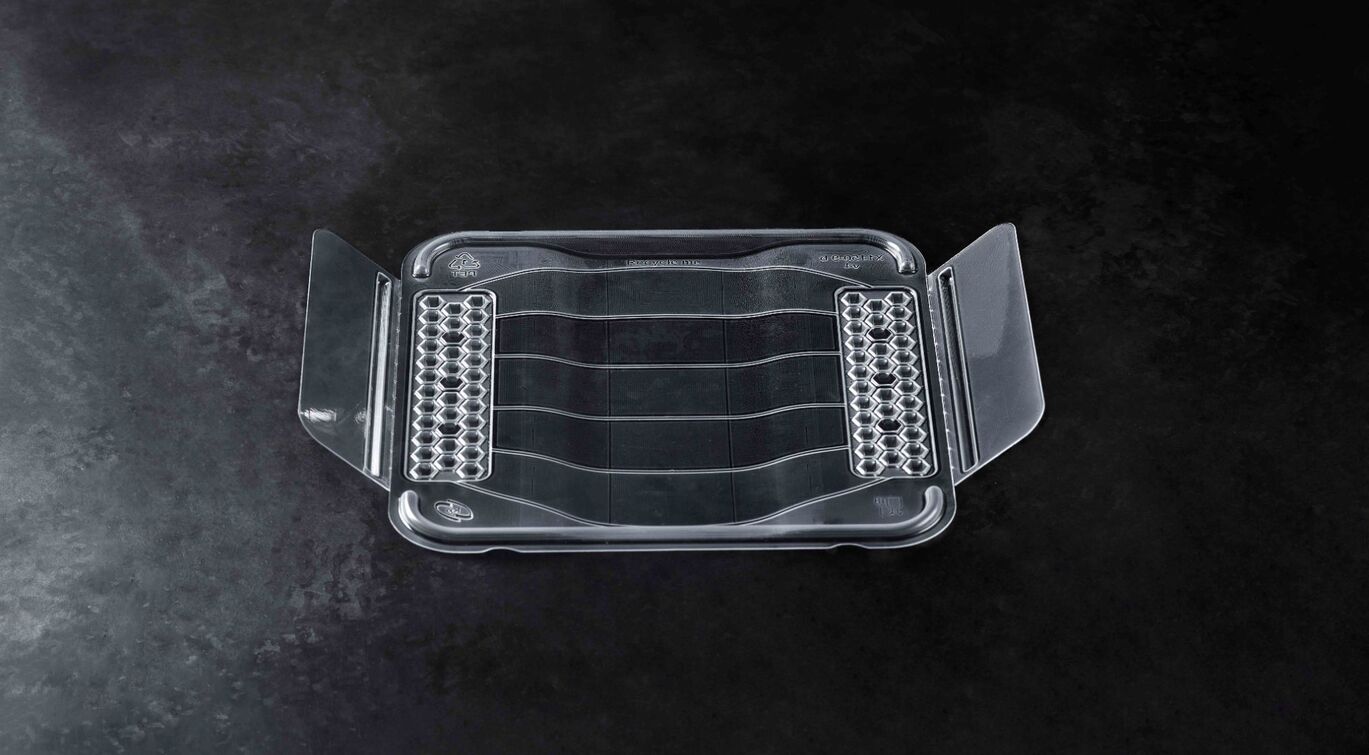
A key feature is kp Zapora® advanced retention-chamber geometry. Replacing the need for absorbent pads and adhesives, which complicate the end-of-life recycling process, this unique material structure guides released juices away from the product surface into dedicated micro-vacuum retention zones. This helps reduce liquid build-up, supports leak prevention during distribution and handling, and creates a cleaner, more appealing product presentation on shelf.
This is the direction protein packaging is heading: not towards less packaging at any cost, but towards better packaging design that protects more, wastes less, recycles easily, and supports carbon reduction.
For brands, processors, and retailers, kp Evolve® Fish Boards represent a strategic advancement in packaging for processed fish. They bring together performance, product protection and recyclability in a single, scalable solution designed for today’s regulatory and commercial landscape.
In a market where freshness, safety, circularity, and compliance are increasingly inseparable, kp Evolve® Fish Boards set a new standard for vacuum packaging – one that is ready to scale with the evolving demands of the protein value chain.
This is the direction protein packaging is heading: not towards less packaging at any cost, but towards better packaging design that protects more, wastes less, recycles easily, and supports carbon reduction.
For brands, processors, and retailers, kp Evolve® Fish Boards represent a strategic advancement in packaging for processed fish. They bring together performance, product protection and recyclability in a single, scalable solution designed for today’s regulatory and commercial landscape.
In a market where freshness, safety, circularity, and compliance are increasingly inseparable, kp Evolve® Fish Boards set a new standard for vacuum packaging – one that is ready to scale with the evolving demands of the protein value chain.
Explore kp Evolve® Fish Boards and how they are redefining recyclable vacuum packaging for processed fish.
Explore kp Evolve® Fish Boards
Follow us


Contact us
Klöckner Pentaplast GroupCapital House, 4th Floor,
25 Chapel Street
London NW1 5DH
United Kingdom
Legal
Copyright® Klöckner Pentaplast 2026 | kp and other kp marks are registered or proprietary marks of Klöckner Pentaplast