


Designing for the future: EPR, recyclability, and packaging performance in the US

Extended Producer Responsibility (EPR) is no longer a future consideration in the United States. It is simply reality. That means packaging decisions made today will directly influence future compliance costs, sustainability performance, and competitive positioning.
Operating globally, kp has a clear view of what the US transition involves, where the complexity lies, and how businesses can get ahead of it. Below, we set out where the nation currently stands, how its approach differs structurally from what has been built in Europe and Canada, and what those differences mean in practice for packaging strategy.
Already up to date and ready to put packaging plans into action?
Already up to date and ready to put packaging plans into action?
Share this story
A state-by-state system
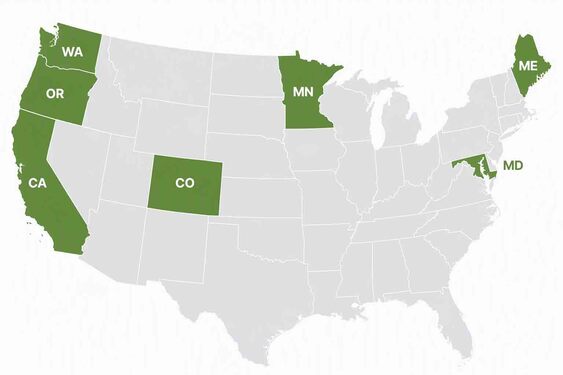
Unlike Europe, the US does not have a single national EPR framework. Instead, seven states - California, Colorado, Maine, Maryland, Minnesota, Oregon, and Washington - have enacted packaging EPR legislation, each with its own requirements, timelines, and fee structures. Others are actively exploring the possibility of future EPR measures, including Hawaii, New York, and Nebraska, making it likely that the situation will further evolve in the coming years.
Oregon and Colorado have already launched operational programmes, while other states remain in earlier implementation phases. This creates significant complexity for producers operating across multiple states, as reporting obligations, the materials covered, and compliance requirements vary.
The Circular Action Alliance (CAA) helps coordinate producer reporting across several states, but it does not eliminate the differences between state programmes. As a result, businesses must manage multiple compliance systems that overlap and differ in varying degrees, rather than a single national framework.
The Circular Action Alliance (CAA) helps coordinate producer reporting across several states, but it does not eliminate the differences between state programmes. As a result, businesses must manage multiple compliance systems that overlap and differ in varying degrees, rather than a single national framework.
In Canada, collaboration across provinces has created better connectivity between stewardship programmes. In the US, that harmonisation has not yet materialised, though observers expect it to increase over time as more states roll out legislation, and best practice emerges.
Fee structures are emerging
Materials that hinder recycling face higher costs – for example, PET thermoformed containers attract a considerably higher rate than clear PET bottles, which sit at the lower end of the fee scale
The financial impact of EPR is becoming clearer as states begin implementing fee structures.
Oregon's fees vary by material and packaging format, with some packaging types carrying significantly higher costs than others. Colorado has introduced the first active eco-modulation system in the US, adjusting fees based on packaging design. Materials that hinder recycling face higher costs – for example, PET thermoformed containers attract a considerably higher rate than clear PET bottles, which sit at the lower end of the fee scale. At the same time, recyclability improvements, lightweighting, and the use of post-consumer recycled (PCR) content can reduce fees.
California's programme adds another layer of detail. Beginning in 2027, producers will contribute $500 million annually to a plastic pollution mitigation fund, in addition to standard EPR fees, making California one of the most significant EPR markets in North America.
The political debate around how that fund is spent is already underway, and the legislative landscape remains active. Ongoing legal challenges and regulatory revisions are still working through the system, so the situation remains uncertain.
Oregon's fees vary by material and packaging format, with some packaging types carrying significantly higher costs than others. Colorado has introduced the first active eco-modulation system in the US, adjusting fees based on packaging design. Materials that hinder recycling face higher costs – for example, PET thermoformed containers attract a considerably higher rate than clear PET bottles, which sit at the lower end of the fee scale. At the same time, recyclability improvements, lightweighting, and the use of post-consumer recycled (PCR) content can reduce fees.
This approach mirrors mature European systems, where EPR is increasingly used not only to fund waste management but also to incentivise better packaging design.
California's programme adds another layer of detail. Beginning in 2027, producers will contribute $500 million annually to a plastic pollution mitigation fund, in addition to standard EPR fees, making California one of the most significant EPR markets in North America.
The political debate around how that fund is spent is already underway, and the legislative landscape remains active. Ongoing legal challenges and regulatory revisions are still working through the system, so the situation remains uncertain.
Recycled content requirements are expanding
Alongside EPR, recycled content mandates are placing additional pressure on packaging producers.
California now requires 25% recycled content in many plastic packaging applications, while states such as Connecticut, Maine, Washington, and New Jersey have implemented or are expanding similar requirements. Some states have already begun enforcing penalties for non-compliance.
California now requires 25% recycled content in many plastic packaging applications, while states such as Connecticut, Maine, Washington, and New Jersey have implemented or are expanding similar requirements. Some states have already begun enforcing penalties for non-compliance.
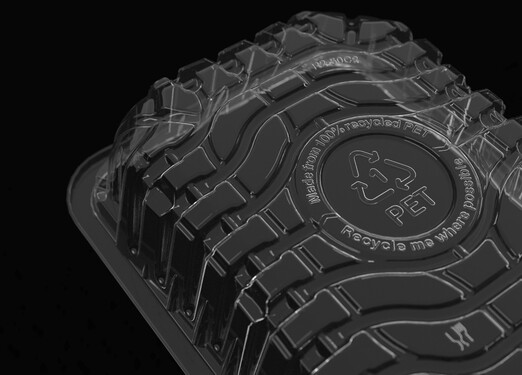
A key challenge is supply. Unlike Europe, where recycled material markets are increasingly integrated, North America faces constraints in domestic recycled PET (rPET) availability. As mandates expand, demand for high-quality recycled content may outpace available supply, creating both cost and sourcing challenges for packaging users.
NAPCOR, the trade body for the PET packaging sector, has been vocal on this issue, advocating for policies that prioritise domestic rPET supply and calling for better alignment between recycled content requirements and the need to maintain a viable North American recycling industry.
NAPCOR, the trade body for the PET packaging sector, has been vocal on this issue, advocating for policies that prioritise domestic rPET supply and calling for better alignment between recycled content requirements and the need to maintain a viable North American recycling industry.
How the US differs from Europe
While the goals of EPR are similar globally, the US model differs from Europe in several important ways.
European EPR systems generally operate through well-established Producer Responsibility Organizations (PROs) with relatively consistent regulatory structures across countries. Funds are typically directed toward recycling infrastructure, collection systems, and consumer education.
In the US, funding mechanisms and programme objectives vary by state. Additionally, Deposit Return Schemes (DRS), or ’bottle bills’, operate independently from EPR programmes. The interaction between DRS and EPR differs by state, creating additional complexity for producers selling products nationally.
European EPR systems generally operate through well-established Producer Responsibility Organizations (PROs) with relatively consistent regulatory structures across countries. Funds are typically directed toward recycling infrastructure, collection systems, and consumer education.
In the US, funding mechanisms and programme objectives vary by state. Additionally, Deposit Return Schemes (DRS), or ’bottle bills’, operate independently from EPR programmes. The interaction between DRS and EPR differs by state, creating additional complexity for producers selling products nationally.
From compliance to strategy

Organisations that view EPR solely as a compliance obligation risk facing pressure from ongoing redesign efforts and escalating fees. Those that proactively design for recyclability, optimise material usage, and incorporate recycled content are better positioned to manage costs, meet future regulatory requirements, and strengthen sustainability claims.
Colorado's eco-modulation framework signals where US EPR programmes are heading. The objective is no longer simply to recover waste management costs - it is to influence packaging design decisions through financial incentives.
At kp, we help customers navigate evolving EPR requirements through recyclable mono-material solutions, credible recycled-content options, and lightweight packaging designs that maintain performance while reducing environmental impact and long-term compliance costs.
The regulatory landscape remains complex, but one thing is certain: businesses that act early will be best positioned for success as EPR continues to expand across the United States. Let kp be your guide through this new era - find out more here:
More like this
Follow us


Contact us
Klöckner Pentaplast GroupCapital House, 4th Floor,
25 Chapel Street
London NW1 5DH
United Kingdom
Legal
Copyright® Klöckner Pentaplast 2026 | kp and other kp marks are registered or proprietary marks of Klöckner Pentaplast