


Bakery packaging trends: Balancing sustainability, visibility, and performance
Driven by demand for affordable indulgence and food-to-go convenience, the industrial bakery sector is forecast to exceed $700bn USD in size by 2030:
These conditions have enabled the sector to become a resilient growth driver, as consumers continue to seek accessible treats and convenient snacking options.
However, growing demand is matched by increasing pressure on bakery producers. Rising costs and supply chain constraints remain key challenges, while expectations around product quality have never been higher.
A cake needs to arrive intact. Pastries must look fresh and appealing. Frozen products require protection across extended supply chains, and food-to-go bakery must withstand being carried, opened, closed, and consumed on the move.
No single material or format can meet all of these demands alone, which is why kp supports bakery producers with a broad portfolio of flexible and rigid packaging innovations.
However, growing demand is matched by increasing pressure on bakery producers. Rising costs and supply chain constraints remain key challenges, while expectations around product quality have never been higher.
A cake needs to arrive intact. Pastries must look fresh and appealing. Frozen products require protection across extended supply chains, and food-to-go bakery must withstand being carried, opened, closed, and consumed on the move.
No single material or format can meet all of these demands alone, which is why kp supports bakery producers with a broad portfolio of flexible and rigid packaging innovations.
Share this story
Sustainable bakery packaging has to work
For bakery producers, the most effective packaging solutions balance sustainability, shelf appeal, convenience, product protection and operational efficiency within a single packaging solution.
As regulations tighten and consumer awareness increases, sustainability must be integrated into product development from the outset. Retrofitting materials at the end of the process rarely delivers the required results.
Consumers expect sustainable packaging - but not at the expense of quality, taste or presentation. Packaging must protect all three to help prevent food waste, stemming from damaged or unsold products.
Recyclability and material reduction remain critical, but must be considered alongside clarity, rigidity, closure performance and barrier properties – particularly for fresh and frozen bakery applications.
As regulations tighten and consumer awareness increases, sustainability must be integrated into product development from the outset. Retrofitting materials at the end of the process rarely delivers the required results.
Consumers expect sustainable packaging - but not at the expense of quality, taste or presentation. Packaging must protect all three to help prevent food waste, stemming from damaged or unsold products.
Recyclability and material reduction remain critical, but must be considered alongside clarity, rigidity, closure performance and barrier properties – particularly for fresh and frozen bakery applications.
This balance is becoming more important as measures like the EU Packaging and Packaging Waste Regulation (PPWR) raise expectations across the market. Regulation, retailer commitments and consumer scrutiny are driving demand for reduced material use, higher recycled content and recyclable designs. The best material choice is not always the simplest.
Designing materials for bakery plants
Paper and cardboard remain central to industrial bakery packaging discussions, but in bakery production environments - where humidity, grease, moisture, and condensation are constant factors - fibre-based materials often require coatings and plastic windows to perform effectively.
PET and rPET materials provide distinct advantages in this context. In bakery - a highly visual category - presentation directly influences product selection, and poor material choices can limit both recyclability and product visibility.
PET and rPET materials provide distinct advantages in this context. In bakery - a highly visual category - presentation directly influences product selection, and poor material choices can limit both recyclability and product visibility.
High-clarity packaging showcases texture, finish, decoration and freshness. For premium products, visibility can communicate quality more effectively than heavy branding. For food-to-go, it can determine whether a product stands out or is overlooked.
Material selection and pack design are closely linked. PET and rPET combine transparency, recyclability, mechanical strength and strong shelf presentation – an essential balance where the ability to see the product, influences purchase and protection helps reduce food waste.
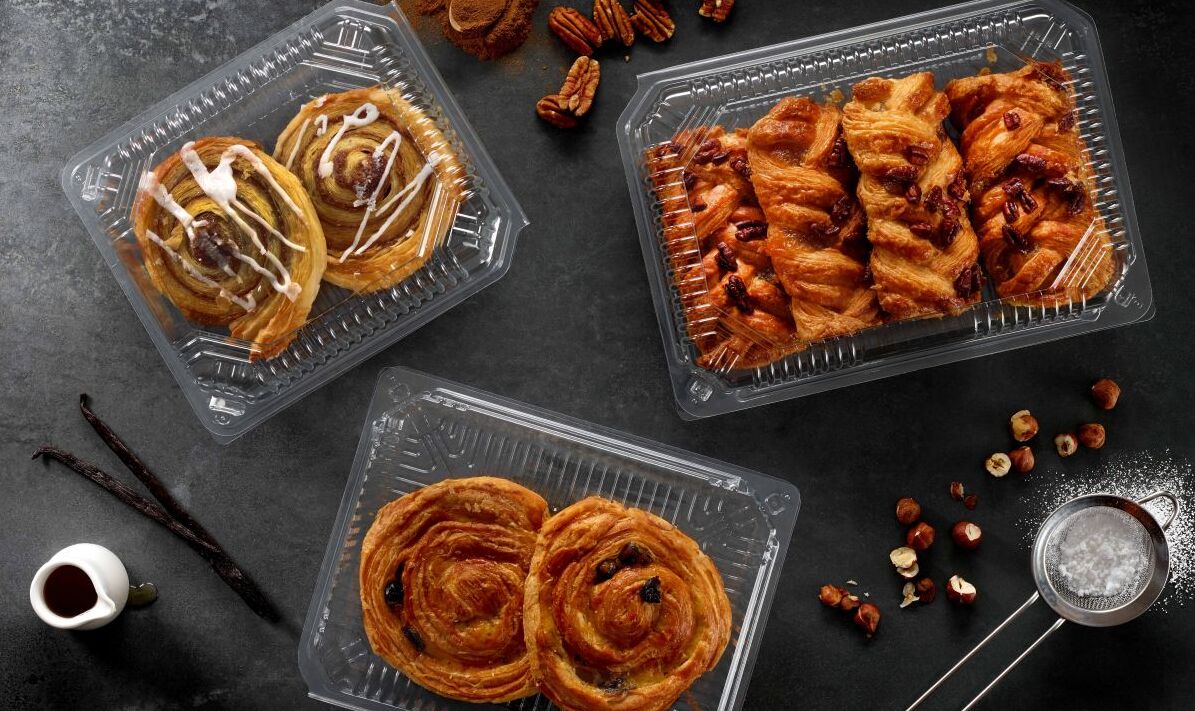
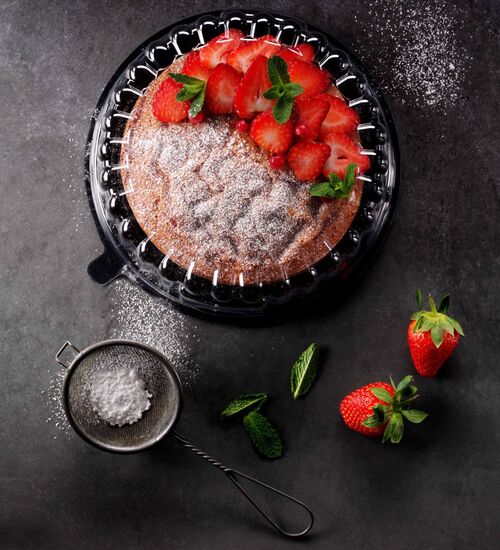
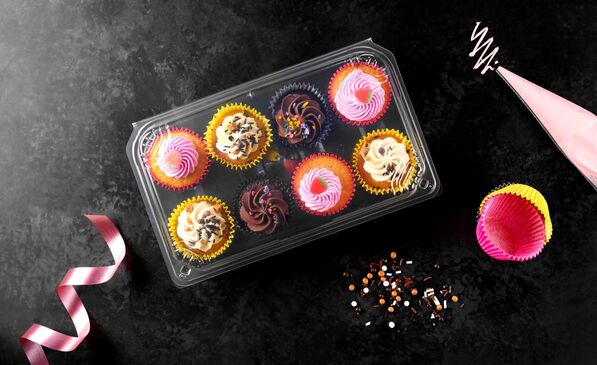
At kp, this approach guides every packaging decision. Our PET cake containers, hinged boxes and multi-cavity pastry packs are designed to present products clearly, while meeting the practical demands of industrial bakery operations.
At kp, this approach guides every packaging decision. Our PET cake containers, hinged boxes and multi-cavity pastry packs are designed to present products clearly, while meeting the practical demands of industrial bakery operations.
Consumer lifestyles are driving change
Changing lifestyles are accelerating demand for snacking, smaller portions, food-to-go formats and shared multipacks.
Consumers expect packaging that is easy to carry, open, and reclose. This is driving demand for single-serve formats, separable multipacks, portable designs and secure closure systems.
For pastries, morning goods and multi-portion products, effective reclose functionality helps maintain freshness after opening and provides greater flexibility. This is not only a matter of convenience – it is also an accessibility consideration. Packaging that is difficult to open, fails in transit or does not close securely can negatively impact both the product experience and brand perception.
Consumers expect packaging that is easy to carry, open, and reclose. This is driving demand for single-serve formats, separable multipacks, portable designs and secure closure systems.
For pastries, morning goods and multi-portion products, effective reclose functionality helps maintain freshness after opening and provides greater flexibility. This is not only a matter of convenience – it is also an accessibility consideration. Packaging that is difficult to open, fails in transit or does not close securely can negatively impact both the product experience and brand perception.
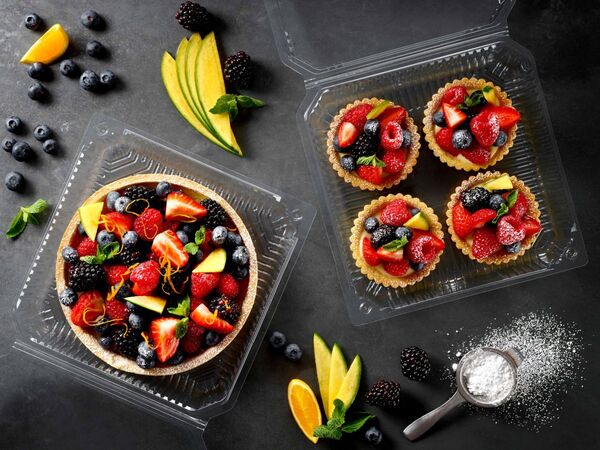
Convenience and usability must be designed into the pack structure. Hinged and airtight formats combine protection, visibility and ease of use to enhance retail presentation and post-purchase handling.
At kp, we continue to refine our solutions to reduce weight, improve product protection, and support recyclable, high-clarity formats aligned with today’s supply chain needs.
Designing for the full system
These challenges will only grow as the industrial bakery sector evolves. The focus is no longer plastic versus paper, sustainability versus performance, or presentation versus recyclability.
The requirement is to design packaging that performs across all of these demands simultaneously.
For fresh and frozen bakery producers, this means working with packaging partners who understand the full system - material selection, product protection, shelf presentation, operational efficiency, regulatory requirements, and end-of-life outcomes.
At kp, we continue to refine our solutions to reduce weight, improve product protection, and support recyclable, high-clarity formats aligned with today’s supply chain needs.
From cake containers and hinged boxes, to multi-cavity pastry packs and airtight solutions, the objective remains consistent: packaging that protects the product, presents it beautifully, and supports future-ready bakery operations.
The requirement is to design packaging that performs across all of these demands simultaneously.
For fresh and frozen bakery producers, this means working with packaging partners who understand the full system - material selection, product protection, shelf presentation, operational efficiency, regulatory requirements, and end-of-life outcomes.
At kp, we continue to refine our solutions to reduce weight, improve product protection, and support recyclable, high-clarity formats aligned with today’s supply chain needs.
From cake containers and hinged boxes, to multi-cavity pastry packs and airtight solutions, the objective remains consistent: packaging that protects the product, presents it beautifully, and supports future-ready bakery operations.
More like this
Follow us


Contact us
Klöckner Pentaplast GroupCapital House, 4th Floor,
25 Chapel Street
London NW1 5DH
United Kingdom
Legal
Copyright® Klöckner Pentaplast 2026 | kp and other kp marks are registered or proprietary marks of Klöckner Pentaplast