



kp delves Inside the Future of Food Packaging with industry leaders
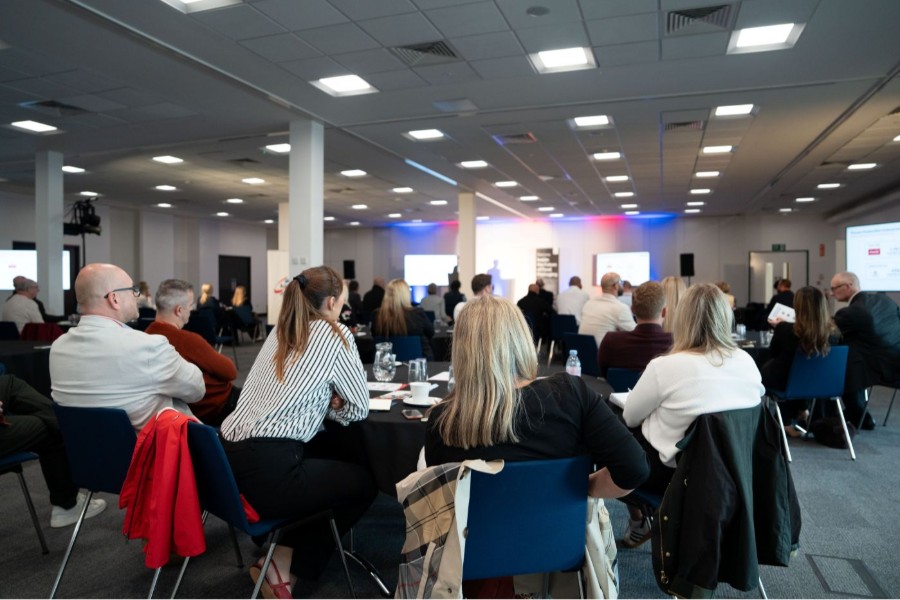
That conviction is what led us to bring together voices from across the value chain for our ‘Inside the Future of Food Packaging’ event, held at the iconic Silverstone motor racing circuit. Retailers, recyclers, technology providers and manufacturers all joined the conversation on how the industry can adapt to evolving sustainability regulations while maintaining performance, shelf appeal and commercial viability.
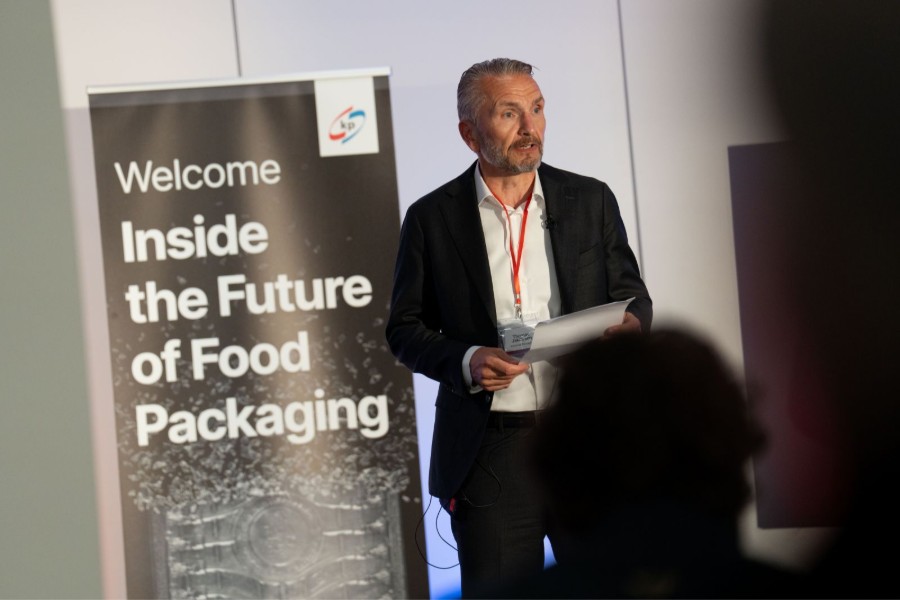
The strongest overarching theme of the day is one that kp encounters every day: food packaging is being pulled in multiple directions at once. Performance, sustainability, compliance, cost, recyclability, recovery infrastructure, and consumer trust are all essential considerations. During the kp event, speaker after speaker reinforced how the role of packaging has evolved into something that helps food businesses make confident decisions under greater scrutiny and tighter timelines.
That is precisely the challenge that kp’s portfolio is built around. Whether it’s kp Elite®, our mono-material MAP trays made from up to 100% rPET, kp Infinity®, our fully recyclable EPP-based alternative to banned single serve EPS food packaging, or any other innovation throughout the range, customers can rest assured that kp technologies are designed not just for market needs today, but tomorrow too.
The time when packaging was a supporting player is in the past; it’s now a headline act. This was evidenced by James Piper of the Talking Rubbish podcast, whose talk at the event focused on packaging communication as a live public issue. Talking Rubbish’s audience demonstrates this clearly, showing that consumers are highly engaged, although they are often sceptical, confused, and quick to challenge claims. The podcast’s reported 250,000 downloads, 400-person Discord community, 91% average episode completion, and 10 million social media views show that recycling and packaging can generate sustained attention when explained accessibly both inside and outside the industry.
James highlighted confusion around QR codes, Deposit Return Schemes (DRS) policies, and generic or misleading recycling claims to illustrate that the industry has a tendency to make things complex when what consumers really want is clarity. Technical proof points have to be presented in context and communicated effectively to appeal to modern consumers.
For example, James discussed the gap between recycling data and public-facing recycling claims. Campaigns that count individual plastic items rather than weighing them are unhelpful, because they can count a crisp packet and a plastic bottle equally, even though they represent very different amounts of material. Communications need a consistently clear approach when making claims and applying data.
At kp, this point in particular resonates very clearly. Communicating the data and credentials of innovations like kp Tray2Tray®, which supports closed-loop recycling of PET trays back into trays, requires precision and honesty, rather than marketing buzzwords. The industry earns trust by being specific, verifiable, and consistent.
In the week of the event, a coalition of more than 200 companies signed a letter urging the EU not to reopen the Packaging and Packaging Waste Regulation (PPWR) and to implement it efficiently. This only reinforces the fact that the issue of regulations is a live and still evolving one.
Unsurprisingly, PPWR and EPR reforms were a key topic of discussion at the event. Denise Mathieson, Head of Packaging Innovation & Programme Delivery at Waitrose & Partners, suggested that the raft of new compliance standards created a balancing act that many businesses are still unprepared for. While the focus on EPR is welcome, Denise argued that the same focus should be applied to PPWR, given its far-reaching impact on issues like PET recycling.
Preparing customers for this regulatory environment is core to our proposition at kp. Our SmartCycle® technology enables the production of packaging with verifiable post-consumer recycled content, while kp Tray2Tray® provides a proven, commercially viable closed-loop model. These are not future plans or concepts; these platforms are operational today.
Soft plastics are one of the most important topics in the new era of packaging. They offer unparalleled functionality for food processors, they are lightweight and easy to transport, and they are highly durable and proven to limit food waste. However, they still pose challenges in recycling - challenges that are only growing more pressing with the advent of PPWR.
Addressing these matters requires close collaboration between packaging innovators like kp and retailers, and this was a key theme of the event. The packaging industry and retailers can introduce change individually, but working together is the only way to make it stick.
The ‘Inside the Future of Food Packaging’ event covered many case studies that demonstrated how this kind of collaboration can drive real progress. For example, Tesco’s ‘Bring Back’ trial; partnerships with Plastic Energy and SABIC; customer-returned soft plastics being used in cheese wrap,and later moved towards mono-material solutions when chemical recycling proved too costly and complex. The best case studies always focus on the practical, rather than the theoretical, and events like this present an opportunity to learn from them.
kp's own flexible films range, including kp FlexiFlow® and kp FlexiLam®, is engineered with exactly this kind of end-of-life thinking built in. Progress on soft plastics will not come from packaging developers working alone; it will come from co-developing solutions with the retailers and processors who understand what recovery infrastructure can realistically handle.
Waste management has historically been a physical infrastructure challenge. Increasingly though, it’s also a digital one, in the form of AI, automation, and smart solutions. The businesses best-positioned for success are already working towards this digital-focused future today.
Yaseed Chaumoo, Managing Director of Greyparrot, took to the stage to unpack some of the hottest, yet most complex questions facing packaging today, discussing how AI can be used to support packaging circularity. Deepnest is an AI-powered tool that uses Greyparrot’s global AI waste analytics network to track billions of waste objects every year.
This presentation underlined the power AI has when used intelligently across the packaging life cycle. In the case of Deepnest, it can break down packaging items into individual components and evaluate these components against metrics like sortability, contamination rate, volume, fee exposure, and more. This enables designers to model how swapping out a bottle cap or a sleeve, for example, might impact recycling outcomes and costs across various markets.
The session was a vivid demonstration of how packaging design decisions made today will directly affect tomorrow's recycling outcomes, and that the tools to make better decisions already exist.
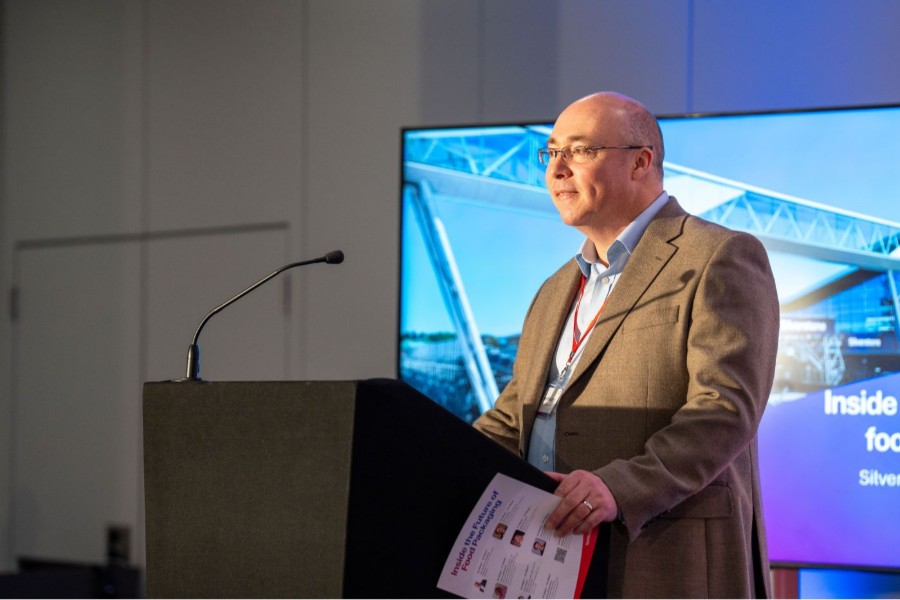
Another AI-focused highlight of the event was a presentation from Sean Maley, Regional Sales Manager (Europe) at industrial AI expert Infinite Uptime. This session explored a different use case for AI: operational efficiency on the factory floor.
Prescriptive AI on the factory floor can detect equipment problems before failures occur, giving plant teams a single recommendation that explains what is wrong, why it is happening, and what action to take. This presentation provided a number of useful insights by grounding AI in practical outcomes: reduced downtime, fewer missed customer commitments, less pressure on stretched maintenance teams, and better management of ageing equipment.
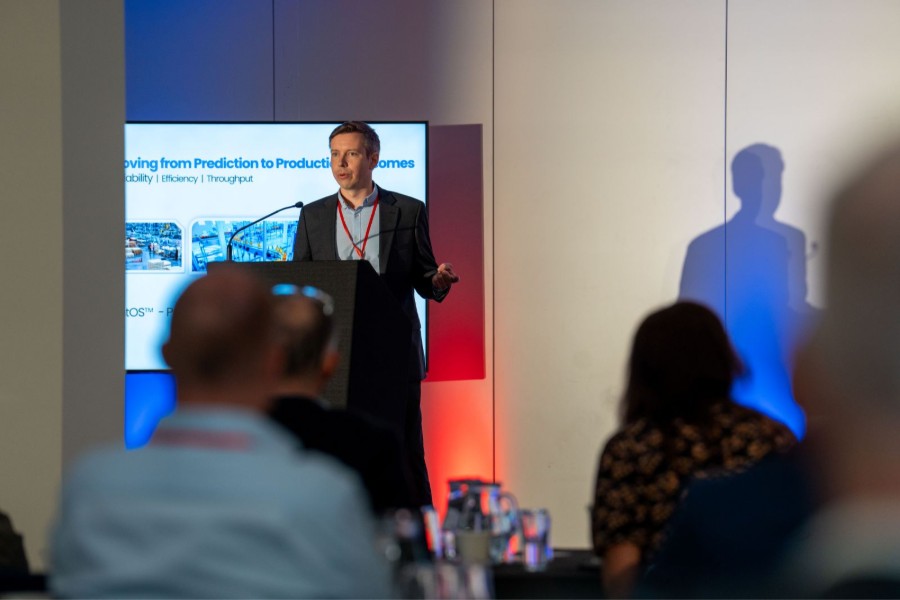
Data is only useful if it’s combined with knowledge, skill, and the drive to make a difference. And, as the ‘Inside the Future of Food Packaging’ event showed, our industry has all three in abundance.
For kp, the discussions at Silverstone reinforced a broader industry reality: the future of food packaging will be shaped by collaboration, shared insight, and a willingness to challenge established thinking.
Bringing together perspectives from across retail, recycling, technology, manufacturing and packaging design was a deliberate choice. Because the challenges ahead, from EPR and PPWR to soft plastics, AI and real-world recyclability, cannot be solved in isolation. They require the kind of open, evidence-led dialogue that the kp event made possible.
Thomas Jakobsen concluded the event perfectly: “The biggest opportunity for us is that our customers don’t know everything we can do for them, and it is super exciting to have an opportunity like today, where we can give some insight and really interact with our customers about the industry.”
As food businesses navigate increasing pressure to perform, comply and adapt, the role of packaging will continue to evolve. Those best positioned to succeed will be those able to combine technical expertise with transparency, data, and cross-industry collaboration.
kp’s focus is on supporting that shift – working in partnership with customers and across the value chain to help turn complexity into clarity and ambition into practical action.
To learn more about kp and its future-proof portfolio of high-performance packaging films, visit Food Packaging films & trays - kp
Watch highlights from the event here: https://www.youtube.com/watch?v=OtVaVc0ZTwU
Focused on delivering its vision: The Sustainable Protection of Everyday Needs, kp is a global leader in rigid and flexible packaging and specialty film solutions, serving the pharmaceutical, medical device, food, beverage and card markets, amongst others. With a broad and innovative portfolio of packaging and product films and services, kp plays an integral role in the customer value chain by safeguarding product integrity, assuring safety and consumer health, improving sustainability, and protecting brand reputation. kp’s “Investing in Better” sustainability strategy solidifies its commitment to achieving ten clear targets for long-term improvement by increasing the recycling and recyclability of products, cutting carbon emissions and continuous improvement in employee engagement, safety, and diversity, equity and inclusion.
For five consecutive years, kp has held a gold rating from EcoVadis, the leading platform for environmental, social and ethical performance ratings. This ranks kp in the top 1% of companies rated in the manufacturing of plastics products sector.
Founded in 1965, kp has 27 plants in 16 countries and employs over 5,000 people committed to serving customers worldwide in over 60 locations. kp is proud to have celebrated its 60th anniversary in 2025.
For more information visit: www.kpfilms.com
Media contacts:
Karen Quirchove
Marketing Communications Director, Food Packaging
food.packaging@kpfilms.com
+33 (0)7 84 03 04 40
Hilary Barnes
Group Director, Global Communications
kpinfo@kpfilms.com
+44 (0) 7393 249 967
Follow us


Contact us
Klöckner Pentaplast GroupCapital House, 4th Floor,
25 Chapel Street
London NW1 5DH
United Kingdom
Legal